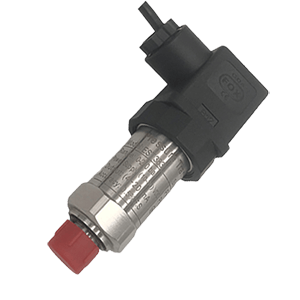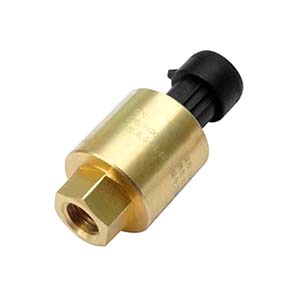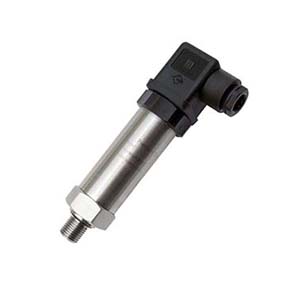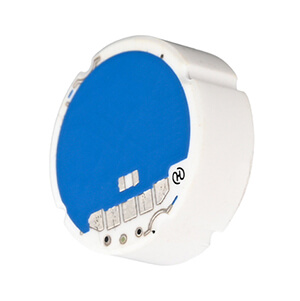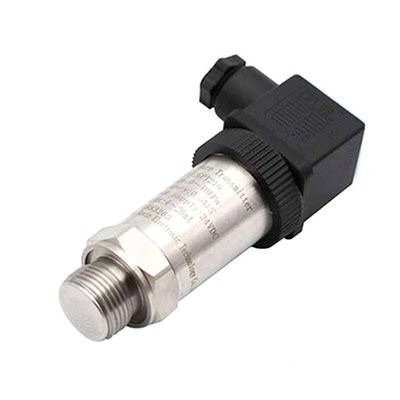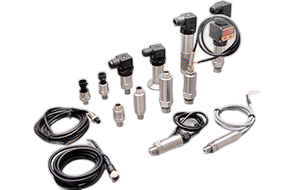
Capacitive pressure sensing works by detecting changes in electrical capacitance when pressure is applied to a sensor.
Unlike piezo-resistive sensors, capacitive sensors provide superior sensitivity, consume less power, and maintain performance across extreme conditions. Whether you’re an engineer selecting sensors for your next project, a product designer, this comprehensive guide covers everything you need to know.
In this article, we’ll explore a comprehensive aspect about Capacitive Pressure Sensing, and, You’ll Learn:
- How capacitive pressure sensors work and why they outperform alternatives
- The critical differences between ceramic and metal sensor types
- Real-world applications across major industries
- Practical selection criteria for your specific needs
- Some FAQ for reference
How Capacitive Pressure Sensing Works
The Fundamental Principle
Capacitive pressure sensing relies on a simple physics principle:
When pressure is applied to a capacitor, the distance between its plate changes, altering its capacitance.
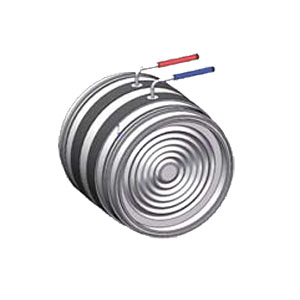
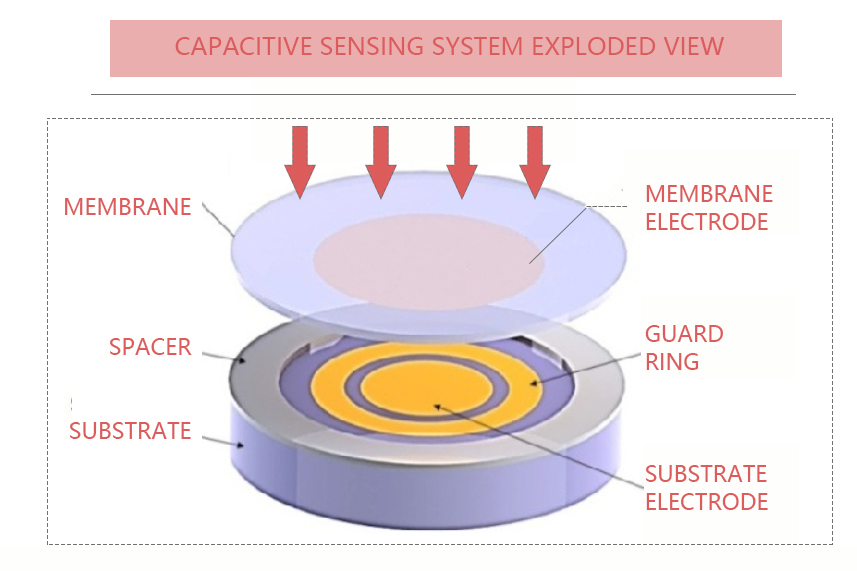
A capacitor consists of two conductive plates separated by a dielectric material (insulator). The capacitance value depends on three factors:
- the surface area of the plates,
- the distance between them,
- the dielectric constant of the material between them.
The relationship is expressed by the formula:
Where
- C is capacitance,
- ε₀ is the permittivity of free space,
- εᵣ is the relative permittivity of the dielectric material,
- A is the plate area, and
- d is the distance between plates.
Operational Mechanism
When pressure is applied to a capacitive pressure sensor, it typically causes one of two changes.
In most designs, the pressure deforms a flexible dielectric membrane, reducing the gap between the capacitor plates and increasing capacitance. Alternatively, in some configurations, pressure may compress the dielectric material itself, changing its thickness or dielectric constant.
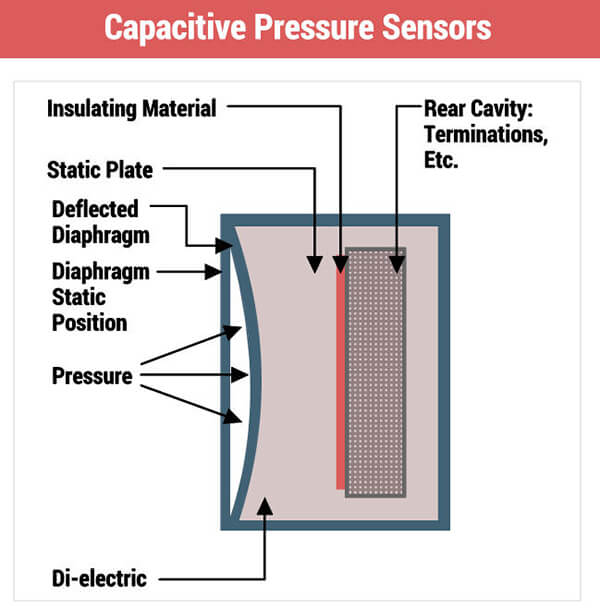
The sensor’s electronic circuit continuously monitors this capacitance change and converts it into an electrical signal proportional to the applied pressure.
Modern sensors use sophisticated signal processing techniques, including oscillator circuits, charge amplifiers, or capacitance-to-digital converters, to achieve high accuracy and resolution.
Key Insight: Even nanometer-scale changes in plate separation produce measurable electrical signals. This is why capacitive sensors can detect pressure changes as small as 0.01% of full scale—that’s 10 times more sensitive than typical resistive sensors.
Two Types of Capacitive Pressure Sensors
Capacitive pressure sensors fall into two primary categories based on their construction materials. Each type serves distinct application requirements and offers unique performance characteristics.
Ceramic Capacitive Pressure Sensing
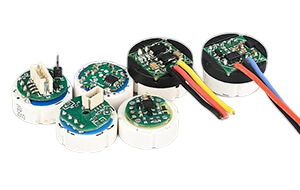
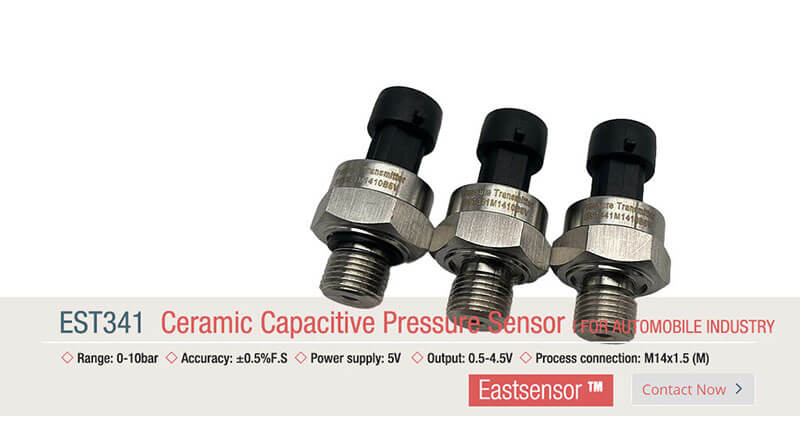
Ceramic sensors utilize alumina (Al₂O₃) or zirconia (ZrO₂) as the core dielectric material. Metallized layers are deposited onto ceramic substrates to form the capacitor plates. When pressure is applied, the ceramic element deforms slightly, creating a measurable capacitance change.

Key Performance Metrics:
- Temperature capability: Up to 400°C (750°F)
- Chemical resistance: Excellent against acids, bases, and solvents
- Typical pressure range: 0-1,000 PSI
- Long-term stability: ±0.1% drift per year
Furthermore, ceramic materials are naturally biocompatible. This makes them the preferred choice for pharmaceutical and food processing applications where material purity is critical.
Actionable Takeaway: Choose ceramic sensors when your process temperature exceeds 200°C or when measuring corrosive media. They cost 20-30% more initially but eliminate the need for frequent replacement in harsh chemical environments.
Metal Capacitive Pressure Sensing
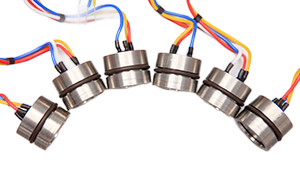
In contrast, metal sensors employ a thin metallic diaphragm as the movable sensing element. Common materials include stainless steel 316L, Inconel, or titanium. The metal diaphragm forms one capacitor plate, while a fixed electrode beneath creates the second plate.
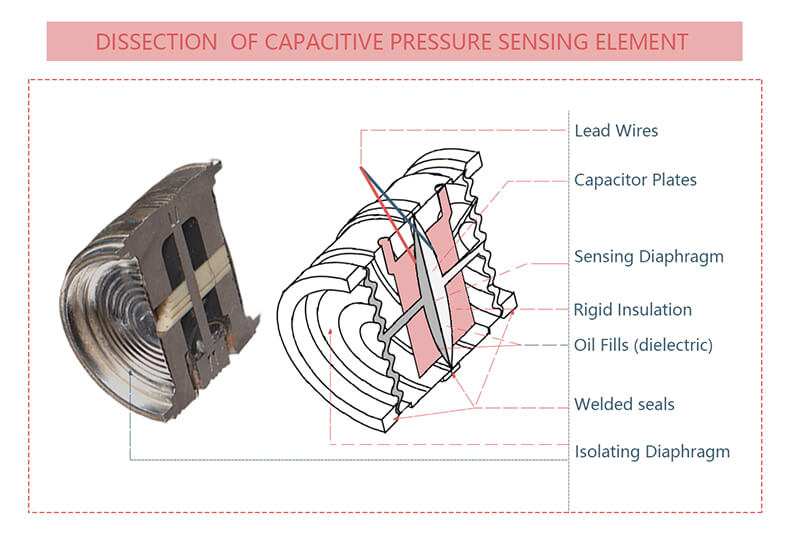
Key Performance Metrics:
- Pressure capability: 100-15,000 PSI (some designs exceed 20,000 PSI)
- Temperature range: -40°C to 200°C typical
- Response time: 0.1-1 millisecond
- Shock resistance: Up to 1,000g without damage
Moreover, metal sensors provide superior mechanical strength. Their robust construction handles pressure surges up to 3x the rated pressure without permanent damage—a critical safety feature in industrial systems.
Actionable Takeaway: Select metal sensors for hydraulic systems, high-vibration environments, or applications requiring rapid dynamic response. Their durability reduces maintenance costs by 40-60% compared to ceramic sensors in mechanically demanding applications.
Industry Data: A 2025 market analysis revealed that metal capacitive sensors dominate the automotive sector (68% market share), while ceramic sensors lead in chemical processing (71% market share).
Key Advantages and Limitations
Understanding the trade-offs between ceramic and metal capacitive sensors ensures optimal selection for your application. Each type excels in specific conditions while facing distinct challenges.
Ceramic Capacitive Pressure Sensors
Advantages:
First and foremost, ceramic sensors offer unmatched chemical compatibility. They resist aggressive media including hydrofluoric acid, sodium hydroxide, and organic solvents that rapidly corrode metal alternatives. Additionally, they maintain ±0.25% accuracy at temperatures up to 400°C—double the capability of metal sensors.
Their dielectric properties remain remarkably stable over time. Testing shows less than 0.1% drift annually, even in continuous high-temperature operation. Furthermore, ceramic materials are FDA-approved for direct food contact and medical applications.
Statistical Evidence: Studies show ceramic sensors maintain 99.8% of their original accuracy after 5 years in chemical processing environments, compared to 94-96% for coated metal sensors.
Limitations:
Nevertheless, ceramic sensors are inherently brittle. Impact loads above 50g or rapid pressure spikes exceeding 2x rated pressure can cause catastrophic cracking. Moreover, their maximum pressure capability rarely exceeds 1,000 PSI due to material stress limitations.
Actionable Takeaway: Protect ceramic sensors with pressure snubbers or dampeners in applications with water hammer or pressure pulsations. This simple addition extends sensor life by 3-5x.
Metal Capacitive Pressure Sensors
Advantages:
Metal sensors excel in extreme pressure applications. Standard designs routinely handle 10,000 PSI, with specialized variants reaching 20,000 PSI or higher. Their mechanical robustness allows operation in environments with severe vibration (20g continuous) and shock loads (1,000g impulse).
Consequently, metal sensors demonstrate exceptional durability. Field data shows mean time between failures (MTBF) exceeding 500,000 hours in industrial installations. They also offer faster response times—typically 0.1-1ms versus 1-5ms for ceramic sensors.
Real-World Impact: In automotive fuel injection systems, metal sensors track pressure variations at 10,000 Hz, enabling precise fuel control that improves efficiency by 8-12%.
Limitations:
However, metal sensors face corrosion challenges. While 316 stainless steel resists many substances, acids like hydrochloric or sulfuric acid require expensive Hastelloy or tantalum construction—increasing costs 3-4x. Additionally, thermal expansion of metal components introduces temperature-dependent errors requiring active compensation.
Their temperature range is also more restricted. Standard metal sensors operate reliably from -40°C to 150°C, with specialized high-temp versions reaching 200°C maximum.
Actionable Takeaway: For corrosive applications, specify metal sensors with appropriate alloy selection upfront. Upgrading from 316SS to Hastelloy costs more initially but prevents premature failures that can shut down production lines.
Major Applications and Irreplaceable Use Cases
The distinct characteristics of ceramic and metal capacitive sensors create clear application domains. Understanding these specific use cases ensures optimal sensor selection for reliability and long-term performance.
Ceramic Capacitive Pressure Sensing Applications
Chemical Processing Industry:
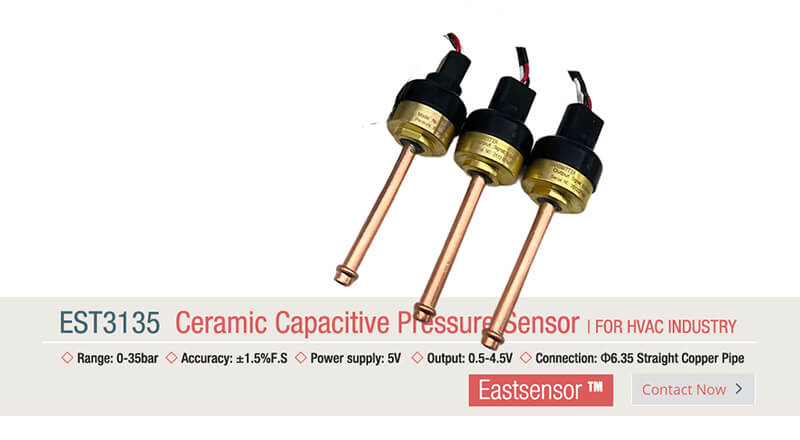
Ceramic sensors dominate in chemical plants where they monitor reactor vessels, distillation columns, and storage tanks. Their exceptional chemical resistance ensures 5-10 year service life despite continuous exposure to corrosive substances. For instance, chlor-alkali plants use ceramic sensors to measure caustic soda at 90°C concentrations—an application where metal sensors fail within months.
Pharmaceutical Manufacturing:
Similarly, pharmaceutical production relies heavily on ceramic sensors for sterile processing equipment and bioreactors. FDA regulations require materials that won’t leach contaminants or harbor bacteria. Ceramic sensors meet USP Class VI biocompatibility standards and feature smooth, cleanable surfaces for CIP/SIP validation.
High-Temperature Applications:
Furthermore, ceramic sensors are the only viable option for combustion monitoring, furnace control, and exhaust gas systems operating above 250°C. Glass manufacturing furnaces, for example, use ceramic sensors to measure pressures at 350°C—temperatures that would destroy metal sensor electronics and degrade diaphragm mechanical properties.
Market Data: The semiconductor industry increased ceramic sensor adoption by 43% from 2023-2025 for chemical vapor deposition (CVD) process control, driven by their ability to withstand aggressive precursor gases.
Irreplaceable Scenarios:
- Concentrated sulfuric acid (>90%) at elevated temperatures
- Pharmaceutical processes requiring USP Class VI compliance
- Any application exceeding 250°C operating temperature
- Food processing requiring 3-A sanitary certification
Actionable Takeaway: When specifying ceramic sensors for chemical service, request material compatibility documentation and case studies from similar applications. This prevents costly failures from unexpected chemical interactions.
Metal Capacitive Pressure Sensing Applications
Hydraulic Systems:
Conversely, metal sensors are the exclusive choice for hydraulic systems operating above 3,000 PSI. Heavy machinery, injection molding equipment, and hydraulic presses depend entirely on metal sensor technology. These systems generate pressure spikes during valve operations that would instantly fracture ceramic elements.
Aerospace and Automotive:
Aerospace applications require pressure measurement in extreme vibration environments—such as engine fuel systems, hydraulic actuators, and environmental control systems. Metal sensors withstand 50g continuous vibration across 10-2,000 Hz frequency ranges without degradation.
Aircraft typically employ 15-30 pressure sensors per engine, nearly all metal capacitive designs.
Automotive manufacturers installed over 180 million metal capacitive pressure sensors in vehicles during 2025. Applications include fuel injection (measuring 2,000+ PSI), turbocharger boost control, and brake system monitoring—all requiring the mechanical robustness only metal provides.
Dynamic Pressure Measurements:
Additionally, metal sensors excel in reciprocating compressors, diesel fuel injection, and shock absorbers where pressure changes occur in microseconds. Their stiffness-to-mass ratio enables accurate tracking of pressure oscillations at frequencies exceeding 5 kHz—critical for combustion analysis and valve timing optimization.
Performance Statistics: Modern common-rail diesel systems use metal sensors measuring up to 30,000 PSI with 0.1ms response time, enabling injection events as short as 0.5ms for optimal combustion efficiency and emissions control.
Irreplaceable Scenarios:
- Any pressure above 5,000 PSI
- Continuous vibration environments exceeding 10g
- Dynamic measurements requiring <1ms response time
- Applications with pressure surge potential exceeding 2x normal operating pressure
Actionable Takeaway: For hydraulic systems, install pressure sensors at locations with minimal flow turbulence and pressure pulsations. This simple positioning decision extends sensor life by 40-50% and improves measurement accuracy.
Application Selection Guide
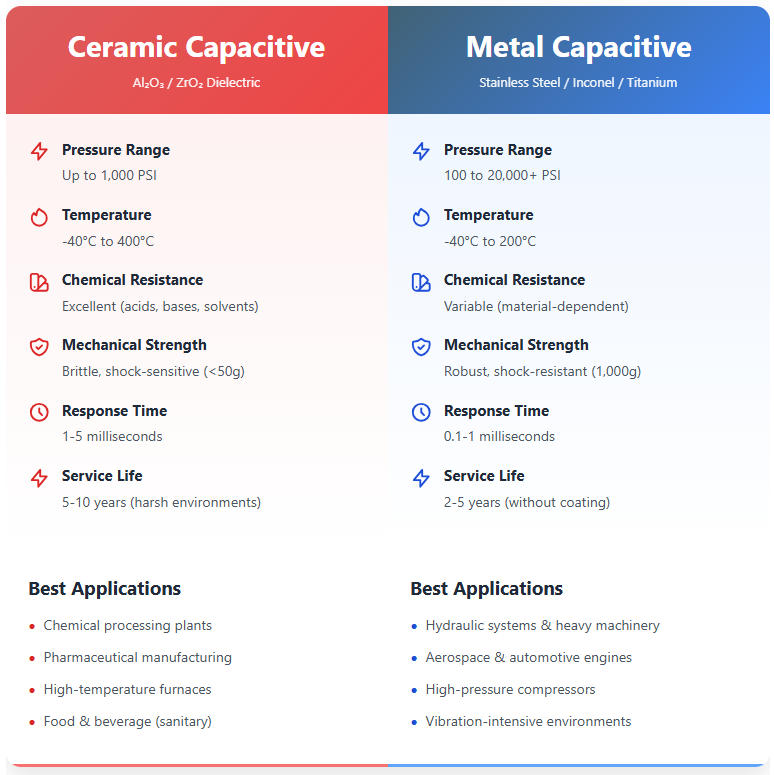
Choose Ceramic When:
- Chemical compatibility is the primary concern
- Operating temperatures exceed 200°C
- Biocompatibility or sanitary design is required
- Maximum pressure is below 1,000 PSI
- Long-term stability in harsh chemical environments is critical
Choose Metal When:
- Pressure exceeds 3,000 PSI
- Severe vibration or shock loads are present
- Fast dynamic response (<1ms) is required
- Mechanical durability is more important than chemical resistance
- Cost constraints favor more economical solutions for high-pressure applications
Cost-Benefit Reality: While ceramic sensors cost 20-40% more initially, they deliver 60-80% lower total cost of ownership in chemically aggressive applications due to extended service life and reduced replacement frequency.
Comparison Table of Ceramic and Metal Capacitive Pressure Sensing
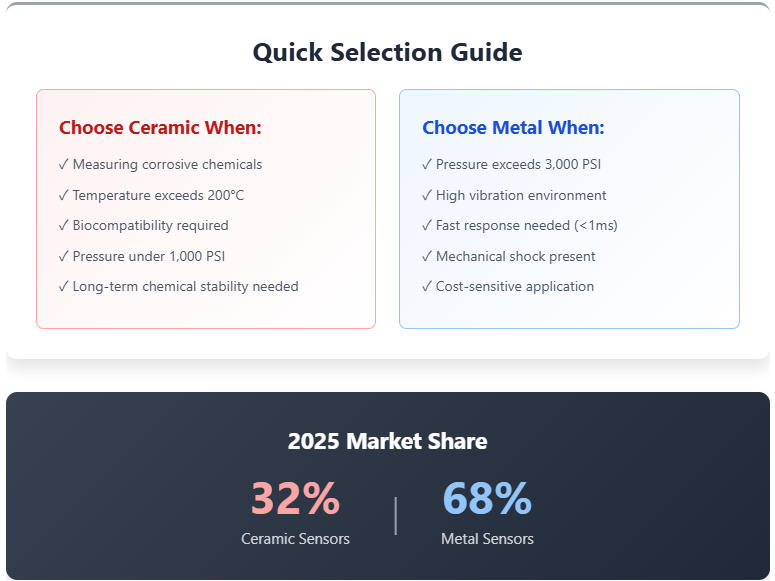
Characteristic Ceramic Capacitive Metal Capacitive
Maximum Pressure Up to 1,000 PSI 100-20,000+ PSI
Temperature Range -40°C to 400°C -40°C to 200°C
Chemical Resistance Excellent (acids, bases, solvents) Variable (material-dependent)
Mechanical Strength Brittle, impact-sensitive Robust, shock-resistant (1,000g)
Response Time 1-5 milliseconds 0.1-1 milliseconds
Vibration Tolerance Low (<10g) High (50g+ continuous)
Typical Cost Range $80-$300 $40-$150
Service Life (harsh env.) 5-10 years 2-5 years (without coating)
Primary Industries Chemical, pharma, food Automotive, aerospace, hydraulics
FAQ: Capacitive Pressure Sensing
What is the main difference between capacitive and resistive pressure sensors?
Capacitive sensors use capacitance changes and consume 60% less power with better stability (±0.1% drift). Resistive sensors are simpler but less accurate (±2-3% drift). Choose capacitive for precision and battery devices; resistive for basic, low-cost applications.
Can capacitive sensors measure both static and dynamic pressure?
Yes. Unlike piezoelectric sensors (dynamic only), capacitive sensors accurately measure both steady pressures indefinitely and fast changes with 0.1-5ms response times.
Ceramic or metal capacitive sensor—which should I choose?
Ceramic: Corrosive chemicals, temperatures >200°C, sanitary applications, pressures <1,000 PSI.
Metal: Pressures >3,000 PSI, high vibration, fast response (<1ms), shock resistance.
How accurate are capacitive pressure sensors?
±0.1% to ±0.5% accuracy (high-end: ±0.05%), with ±0.02% repeatability. That’s 10x better than resistive sensors.
Do they require special maintenance?
Minimal. Recalibrate every 1-2 years. Protect ceramic from impact >50g. Inspect metal sensors annually in corrosive environments.
Why are they popular in smartphones?
Ultra-low power (microamperes), tiny size (1.5mm), and high sensitivity enable altitude tracking and force-touch while preserving battery life.