Introduction
In food and beverage processing facilities, even the smallest gap in a pressure sensor can become a breeding ground for contamination, compromising product safety and bringing production lines to a halt.
Enter the flush diaphragm sensor—a hygiene-focused solution designed specifically to eliminate these hidden hazards.
Food grade pressure sensor advantages:
For food manufacturers, dairy processors, beverage producers, and pharmaceutical-grade facilities, flush diaphragm sensors deliver critical advantages:
- Superior cleanability that supports rigorous sanitization protocols,
- Seamless compliance with FDA and international hygiene standards,
- Dramatically reduced contamination risks,
- Lower maintenance costs through easier cleaning cycles.
In an industry where safety is non-negotiable and regulatory scrutiny continues to intensify, these sensors have become an essential tool for protecting both consumers and brand integrity.
What is a Flush Diaphragm Sensor?
At its core, a flush diaphragm sensor is a specialized pressure measurement device engineered with hygiene as its primary design principle.
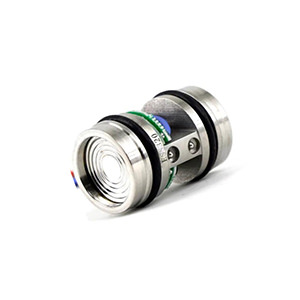
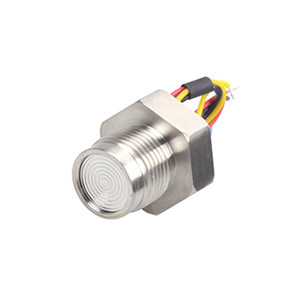
The defining characteristic is its completely flat sensing surface that sits perfectly flush—meaning level and smooth—with the interior wall of pipes, tanks, or processing vessels.
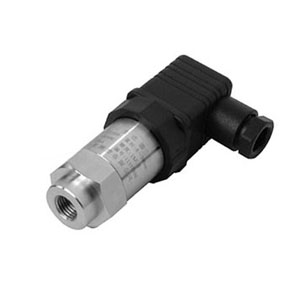
So, unlike traditional pressure sensors with protruding components and cavity-prone designs, flush diaphragm sensors feature a completely smooth, flush-mounted surface that contacts the process medium directly. This seamless design leaves nowhere for product residue or microorganisms to hide.

This creates an uninterrupted, seamless surface where the process medium flows without encountering any obstructions or recesses.
A flush diaphragm sensor eliminates this fundamental flaw through three key design features.
- First, the sensing diaphragm itself—a thin, flexible metal membrane that deflects under pressure—is positioned at the exact same plane as the mounting surface, creating zero offset.
- Second, the entire contact surface is manufactured from a single piece of high-grade stainless steel with an ultra-smooth finish, typically mirror-polished to eliminate microscopic surface irregularities.
- Third, the process connection (whether welded, clamped, or threaded) is designed so that product only touches this smooth, unbroken metal surface.
Critical Hygiene Challenges in Food Processing
Food manufacturers operate under constant pressure to prevent contamination while maintaining production efficiency. Traditional pressure sensors, despite their functional accuracy, introduce several hygiene vulnerabilities that threaten both product safety and operational continuity.
The most insidious problem is bacterial biofilm formation in sensor cavities. Even microscopic gaps—as small as 0.1mm—can harbor Listeria, Salmonella, and other pathogens.
What’s more, these organisms establish biofilm colonies that are notoriously difficult to eradicate, sometimes surviving temperatures up to 80°C and resisting standard sanitizing chemicals.
Once established, these bacterial reservoirs continuously shed microorganisms into the product stream, creating persistent contamination that can evade routine testing protocols.
Product buildup compounds this challenge.
Clean-In-Place (CIP) systems, while effective for smooth pipe surfaces, struggle with traditional sensor geometries. in fact, the turbulent flow and chemical action that clean pipes cannot adequately penetrate recessed sensor chambers.
This forces manufacturers into difficult choices: accept incomplete cleaning, schedule frequent manual disassembly (halting production), or replace sensors more often than necessary.
Meanwhile, regulatory compliance pressures intensify.
So, how they do?
Top 5 Benefits of Flush Diaphragm Sensors for Food & Hygiene Industries
Benefit 1: Superior Cleanability and Hygiene
The elimination of dead spaces represents the most significant hygiene advancement that flush diaphragm sensors bring to food processing. Without cavities or recesses, there are simply no locations where bacteria can establish protected colonies.
- The completely smooth surface ensures that cleaning solutions make full contact with every part of the sensor during automated wash cycles.
- This design makes flush diaphragm sensors fully compatible with both CIP and SIP (Sterilize-In-Place) processes.
Benefit 2: Regulatory Compliance Made Easy
Navigating food safety regulations becomes significantly simpler with flush diaphragm sensors.
The flush design directly addresses the regulation’s prohibition against equipment that cannot be properly cleaned and maintained.
For facilities pursuing EHEDG (European Hygienic Engineering & Design Group) certification or 3-A Sanitary Standards approval, flush diaphragm sensors provide a clear pathway to compliance.
In facts, many manufacturers offer sensors with pre-certified designs that meet these stringent criteria, eliminating the guesswork and validation burden from facility operators. The 3-A symbol, in particular, provides immediate credibility during customer audits and regulatory inspections.
What’s more, traceability improvements are equally valuable—modern flush sensors with digital communication protocols (I2C, RS485, or CAN Bus) can log cleaning cycles, temperature exposure, and operational hours, creating an automated record that supports lot traceability and root cause investigations when quality issues arise.
Benefit 3: Extended Service Life and Reduced Maintenance
Facilities report sensor replacement intervals extending from 18-24 months with traditional pressure sensors to 5-7 years or more with flush designs—some installations exceed a decade of continuous operation.
Thereafter, the total cost of ownership calculation becomes compelling when these factors combine. While flush diaphragm sensors typically cost 30-50% more initially than basic pressure transmitters, the extended service life, eliminated manual cleaning labor, reduced replacement frequency, and avoided production downtime create payback periods of 12-18 months in most applications.
Obviously, the minimal downtime for cleaning and maintenance creates additional operational flexibility.
Benefit 4: Accurate Process Monitoring
Flush diaphragm designs deliver exceptional accuracy consistency over time.
This consistency is critical for process control in applications like pasteurization, where precise pressure monitoring ensures proper temperature-time relationships that guarantee pathogen destruction.
For example, in carbonated beverage production, stable pressure measurement maintains exact CO₂ dissolution levels that define product quality and consistency. Fermentation monitoring in brewing and yogurt production relies on accurate pressure tracking to control biological processes within tight specifications.
Advanced flush diaphragm sensors incorporate temperature compensation capabilities that further enhance accuracy. Since pressure and temperature are interdependent in many food processes, integrated temperature measurement allows the sensor to automatically correct pressure readings for thermal effects, delivering precision that supports lean manufacturing initiatives and reduces waste from out-of-specification batches.
Benefit 5: Versatility Across Applications
Flush diaphragm sensors excel across the entire spectrum of food and hygiene applications, adapting to diverse process conditions while maintaining their core hygienic advantages.
- In dairy processing
- Beverage production
- Meat and poultry processing
- Pharmaceutical-grade food supplement manufacturing
Benefits Comparison Summary
Benefit Key Advantage Primary Impact Typical Improvement
Superior Cleanability No dead spaces Bacterial elimination 20-40% faster cleaning
Regulatory Compliance FDA/EHEDG/3-A ready Simplified audits Pre-certified designs
Extended Service Life Minimal buildup Reduced replacements 5-7 year lifespan
Accurate Monitoring No measurement drift Process consistency Years between calibrations
Application Versatility Dairy to pharma-grade Broad compatibility Single sensor platform
Material Considerations for Food Safety
Material selection in flush diaphragm sensors directly determines their suitability for food contact applications, cleanability, and long-term durability under harsh sanitization protocols.
Food manufacturers must understand these material properties to specify sensors that meet both regulatory requirements and operational demands.
SS316L
Stainless steel 316L remains the industry standard for food-grade sensor construction. The “L” designation indicates low carbon content (maximum 0.03%), which provides superior resistance to intergranular corrosion—particularly important in environments with chloride-based sanitizers.
For applications involving higher temperatures or more aggressive cleaning cycles, 316Ti (titanium-stabilized) offers enhanced performance, particularly in welded constructions where heat-affected zones might otherwise become vulnerable to corrosion.

Ceramic
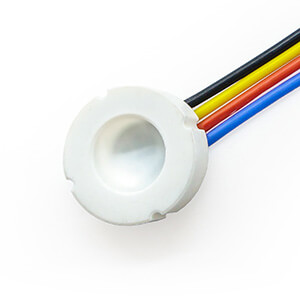
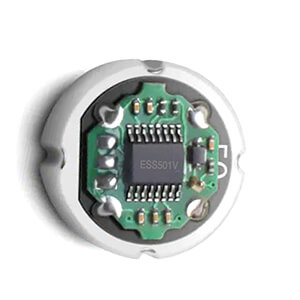
Ceramic diaphragms using Al₂O₃ 96% (96% aluminum oxide) provide an alternative for extremely corrosive applications or processes requiring absolute inertness.
These ceramic sensors excel in acidic beverage production, fermentation monitoring with organic acids, and pharmaceutical applications where even trace metal ion migration is unacceptable.
The hardness and chemical inertness of alumina ceramic make it impervious to virtually all food-grade cleaning chemicals, though the material’s brittleness requires careful installation to avoid mechanical shock.
Click to check more details of “Ceramic Flush Diaphragm Sensor”

All food contact materials must comply with FDA Title 21 CFR 177.2600 (rubber materials) and CFR 178.3297 (colorants for polymers), though flush diaphragm sensors typically contact product only through metal or ceramic surfaces that meet FDA standards by composition rather than specific listing.
Material Selection Guide
Material Best Applications Surface Finish Key Advantage
316L Stainless General food/beverage Ra ≤ 0.5 μm Excellent corrosion resistance
316Ti Stainless High-temp/aggressive CIP Ra ≤ 0.5 μm Superior weld zone stability
Ceramic Al₂O₃ 96% Acidic products/pharma Ra ≤ 0.4 μm Absolute chemical inertness
Electropolished 316L Dairy/aseptic processing Ra ≤ 0.25 μm Maximum cleanability
Conclusion
As regulatory scrutiny intensifies and consumer expectations for food safety continue rising, Flush diaphragm sensors represent a fundamental shift in how food manufacturers approach hygiene and process control, and have evolved from optional upgrades to necessary infrastructure for many operations serious about protecting both product quality and brand reputation.
While the initial investment exceeds conventional alternatives, the compelling return through reduced maintenance, extended service life, and contamination prevention makes them increasingly essential for modern food processing facilities.
FAQ
What's the main difference between a flush diaphragm sensor and a regular pressure sensor?
The key difference is in the design: a flush diaphragm sensor has a completely flat, smooth sensing surface that sits level with the pipe or tank wall, while regular pressure sensors have the sensing element recessed inside a cavity or housing.
Are flush diaphragm sensors more expensive than traditional sensors?
Yes, flush diaphragm sensors typically cost 30-50% more upfront than basic pressure sensors.
Can flush diaphragm sensors handle high-pressure cleaning and sterilization?
Absolutely. Flush diaphragm sensors are specifically designed for harsh cleaning protocols used in food processing.
Do I need to manually clean flush diaphragm sensors, or do they clean automatically?
One of the biggest advantages is that flush diaphragm sensors clean automatically during your normal CIP cycles—no manual disassembly or scrubbing required.
What industries or applications benefit most from flush diaphragm sensors?
Any food or beverage operation where hygiene is critical benefits from flush diaphragm sensors. The most common applications include dairy processing (milk, cheese, yogurt), beverage production (juices, soft drinks, beer, wine), meat and poultry processing, and pharmaceutical-grade food supplements.
They’re particularly valuable in applications with sticky, viscous, or protein-rich products that tend to build up on equipment, and in any facility that must meet strict regulatory standards like FDA, EHEDG, or 3-A certification requirements.
How do I know if my facility needs to upgrade to flush diaphragm sensors?
Consider upgrading if you’re experiencing any of these issues: frequent positive bacteria tests during sanitation verification, extended cleaning times for pressure sensor locations, sensors that need manual disassembly and cleaning, measurement drift requiring frequent recalibration, sensor failures due to clogging or buildup, difficulty passing regulatory audits, or contamination incidents traced to hard-to-clean equipment.